
How to Win Back Customers Who Have Stopped Coming In
Lapsed customers are not one group, they are three — and each needs something different. How to tell them apart, what to send each, and when.
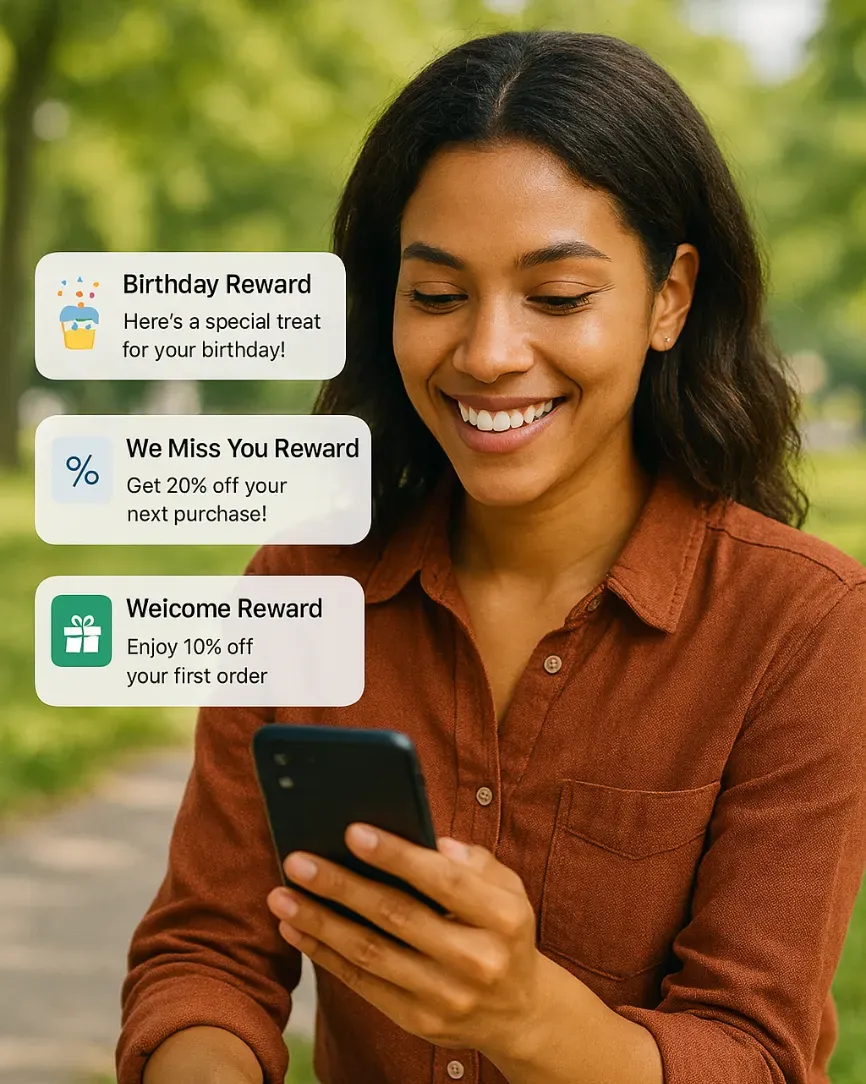
Every business has a quiet pile of people who used to come in and don’t any more. They didn’t complain. They didn’t go anywhere in particular. They just stopped, and nobody noticed on the day it happened.
That group is almost always the cheapest growth available, for a reason that needs no statistics to see: you have already paid to acquire them. They know where you are, they know what they like, and a lot of them still have a card with stamps on it. Compared with finding somebody new, none of that has to be bought twice.
The mistake is treating them as one group. They’re at least three, and sending all three the same message is why most win-back campaigns do nothing.
The three kinds of lapsed customer
1. The ones who never started
They signed up. They collected one stamp, or none at all, and never came back.
This is usually the largest group, and it’s the one most businesses don’t know they have, because it doesn’t feel like a loss — nobody remembers the person who joined and vanished.
It’s also the most fixable. These people already said yes once, at the counter, voluntarily. The barrier was never interest. It was that nothing reminded them, and one stamp on a card of ten doesn’t feel like progress worth returning for.
2. The ones who drifted
Genuine regulars. Came in weekly for months. Then the gaps got longer and eventually stopped.
Almost never a decision. Someone changed jobs, changed route, had a baby, went on holiday and never restarted the habit. Habits are fragile and they break quietly.
This group has the most goodwill and the shortest window. Catching someone at six weeks is a different proposition to catching them at six months.
3. The ones who finished
They completed a card, claimed the reward — and that was the end of it.
This one is worth staring at, because it’s the failure that looks like a success. Your loyalty program worked perfectly right up to the moment it stopped giving them a reason to return. If a lot of people leave immediately after claiming, the program is functioning as a coupon with extra steps.
Working out which you have
You can’t fix these differently until you can tell them apart, which means segmenting rather than guessing. If you’re on Flex Rewards, Custom Audiences does this with saved filters:
| Group | How to find them |
|---|---|
| Never started | Signed up more than 30 days ago and has never collected a card |
| Drifted | High total stamps and a long gap since the last one |
| Finished | Card completed and a long gap since the last stamp |
The counts alone are worth the exercise. Most owners are surprised by the size of the never-started group, and that surprise is usually the most useful thing that comes out of the whole process.
What to send each
Never started → remove the friction, not the price.
Discounting is the wrong instinct here. They didn’t decline on price; they just never got going. A free stamp is better than a discount, because it moves them from “one of ten” to “two of ten” and progress is what pulls people back. Two stamps is better still.
Drifted → say something human, and keep it short.
These people liked you. A message noting they haven’t been in for a while, with no offer at all, works more often than owners expect. If you add anything, make it small. A large discount to someone who was about to come back anyway is money you didn’t need to spend.
Finished → give them a reason for a second card.
The card completing should be a beginning, not an ending. A reward that starts the next card with a stamp or two already on it turns a finish line into a starting line — and if you’re losing people at completion, fix that in the program itself rather than chasing them afterwards.
How long to wait
Too soon reads as nagging. Too late and the habit is gone.
There’s no universal number because “a while” depends entirely on how often a normal customer visits. A useful rule of thumb:
Wait about twice a normal visit interval before treating someone as lapsed.
For a café where regulars come three times a week, that’s roughly two to three weeks of silence. For a salon on a six-week cycle, it’s three months. Applying the café’s timing to the salon means messaging people who are simply not due yet — which is the fastest way to get unsubscribed.
If you don’t know your normal interval, that’s the first thing worth finding out.
Do it automatically or it won’t happen
Here’s the honest problem with everything above: it requires somebody to notice that a particular person has gone quiet, and nobody ever does. It’s not laziness. Absence is invisible in a way that presence isn’t.
Which is why this should be a rule that runs on its own rather than a task on a list. Flex Rewards has We Miss You for exactly this — it targets the lapsed group and can send a message, a free stamp, or a reward, whichever you choose.
Set it up once and it works on people you were never going to remember to think about.
Four ways to get it wrong
Discounting everybody. The moment a win-back offer becomes predictable, you’ve taught your regulars to wait for it. Aim narrowly and vary it.
Messaging too often. One good message beats four. If someone doesn’t respond to a nudge and a follow-up, they’ve answered.
Guilt. “We haven’t seen you in a while!” with a sad face is a small demand for an apology from someone who owes you nothing. Warm and brief beats hurt.
Not checking whether it worked. A campaign that stopped sending looks exactly like a campaign nobody responded to. Look at the numbers occasionally.
Knowing whether it worked
The measure isn’t opens or clicks. It’s how many of the people you targeted came back in and collected a stamp in the following few weeks.
That’s the only number that means anything, and it’s visible in your own stamp data without any extra tooling. Compare it against a group you didn’t message if you want to be rigorous.
Also worth watching the other direction: Custom Alerts can tell you when someone hits a milestone or completes a card, so you find out that a win-back worked while the person is still standing in front of you — which is a far better moment to say something than a week later in a report.
The short version
Split your lapsed customers into never-started, drifted and finished. Send the first a stamp, the second a message, the third a reason to begin a second card. Wait about twice a normal visit interval before deciding someone counts. And automate it, because you will not remember to do it by hand.
If you’re not running any of this yet, start a free 30-day trial — the automatic pieces take about ten minutes to set up and then run without you.
Running a loyalty program across several independent businesses rather than one? Winning back visitors works differently across a whole district. See Digital Passport.