
Why You Should Replace Paper Stamp Cards With a Digital Solution
Paper punch cards leak customers at every step — they get lost, forgotten and forged. Here is what changes when the card lives on the phone instead.
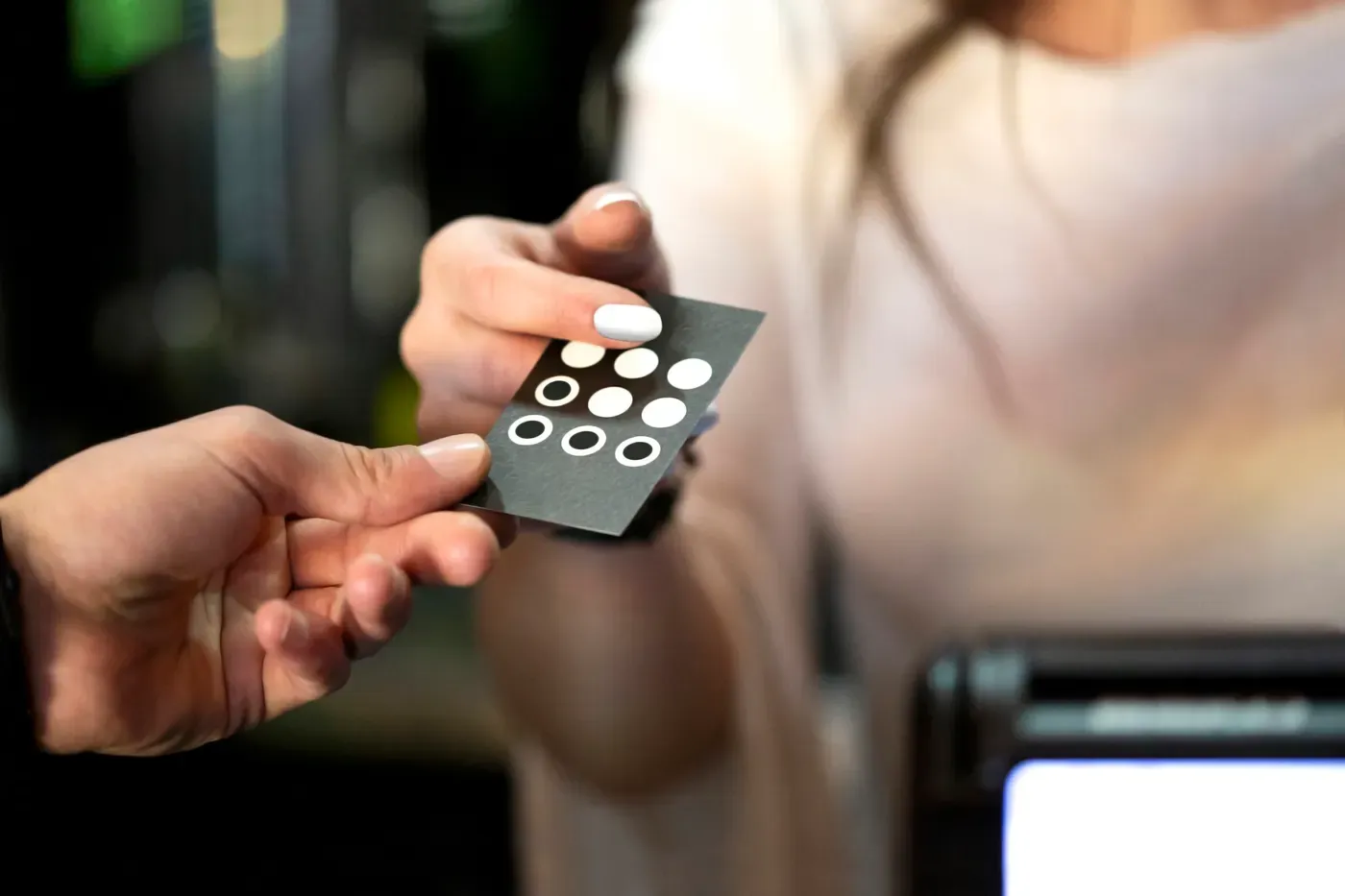
If you are running paper punch cards and wondering whether to move, the honest answer is that one thing changes and it matters more than the other five put together.
You find out who your customers are.
Everything else — convenience, presentation, not reprinting — is real but secondary. Most articles on this topic list six benefits of roughly equal weight. They are not of equal weight.
The thing that actually changes
A paper card is anonymous by design. Someone can come in fifty times, fill three cards, and you still cannot contact them, do not know their name, and have no idea how often they visit.
A digital card is a record. Name, email, mobile, birthday, and every visit with a date on it. That is what lets you do things a paper card can never do at any price:
- Message someone who has not been in for six weeks
- Send a birthday offer
- Know that Tuesdays are quiet because your regulars are Thursday people
- See that thirty people signed up last month and eleven never came back
That last one is the uncomfortable and useful part. Paper does not tell you it is failing. Digital does, which is a benefit even though it does not feel like one.
What a stamp card does not tell you
Being precise, because plenty of articles overpromise here — including an earlier version of this one.
A stamp card records that a visit happened. It does not record what was bought or what it cost. Unless your loyalty tool is wired into your till, it cannot tell you basket size, best-selling items or spend per head.
If you need spend data, that is a points program with a POS integration, which is a bigger and more expensive undertaking. We wrote about when that is worth it and when it isn’t.
So the honest framing: digital gives you who and when, not what and how much. Who and when is enough for almost everything a small business actually does.
The five real, smaller benefits
Nothing gets lost. The card lives on the phone they are already holding. A wallet clear-out does not reset someone to zero, and “I lost my card” stops being a conversation.
You can change it. Ten stamps to eight, a different reward, double stamps on a quiet Tuesday. On paper that is a reprint and every card already in circulation now says the wrong thing.
Stamps cannot be faked. Rubber stamps can be bought and photocopiers exist. Most owners discover this later than they would like.
No stock to manage. No reordering, no running out at the second till.
A bigger purchase can be worth more. One scan can carry several stamps, so “a stamp per $10” or a table of four earning four stamps works properly. A printed card physically cannot express that.
What it costs you — the part usually left out
Digital is not cheaper. That claim gets made a lot and it deserves picking apart.
A print run is a one-off cost that ends. Software is a monthly subscription that continues whether the program is thriving or forgotten. Across the ten tools we price-checked in July 2026 the range ran from free to US$269 a month.
You might save on printing. You will spend on software. Switch because of what you learn about your customers, not because you expect it to be cheaper.
The other honest costs: your customer needs a charged phone with signal, almost every system asks them to identify themselves once, and staff need a few days to get used to a change at the counter.
The two objections worth taking seriously
“My older customers won’t use it.” This was a real concern in 2021 and has largely stopped being one. On most systems the customer scans a code with the camera already on their phone, or holds a pass in Apple or Google Wallet. The awkward step now is the one-time sign-in, not the technology.
“The paper card is part of our brand.” Sometimes genuinely true — a bookshop, a barber, a place where the object matters. If so, keep printing a nice card and put the QR code on it. The card becomes the invitation instead of the record, which is cheaper anyway because it never has to be replaced when it fills up.
How to switch without losing your regulars
This is the part almost nobody writes about, and it is the actual blocker for a business with two hundred part-filled cards behind the till.
1. Honor the paper cards. Do not make anyone start again. Someone seven stamps in has earned those seven, and telling them otherwise costs you the exact customer you most want to keep.
2. Run both for a few weeks. Let paper cards already in circulation finish naturally while new customers join digitally. Set an end date for issuing new paper cards, not for accepting them.
3. Credit the balance where you can. Most systems let staff add several stamps at once, so a customer with a half-full paper card can be moved across in one scan. That conversation — “let me carry those over for you” — is the best possible moment to introduce the new card.
4. Use the printed cards you have left as signage. They already have your branding. Put the joining code on them and hand them out as invitations.
5. Tell your regulars first. The people who will most resent finding out by accident are the ones who have been collecting longest.
Is it worth it?
If you want to be able to contact your customers, yes, and nothing else on this page matters much by comparison. Paper cannot do that at any price.
If you genuinely do not care who your regulars are, paper is simpler, needs no subscription and works when the wifi is down. That is a legitimate position and it is worth being honest that it exists.
Most businesses land on the first answer, which is why paper is now the deliberate choice rather than the default.
If you want to see what the switch actually involves, you can build a card and try it free for 30 days — about half an hour to set up, and running it alongside your paper cards for a week will tell you more than any article.
Running a shared campaign across several venues you don’t own — a downtown district, a market, a shopping center — rather than one business? That is a different product. See Digital Passport.