
Paper vs Digital: The Pros and Cons of Digital vs Paper Stamp Cards
A side-by-side list of what paper stamp cards do well, what they cost you, and where a digital card wins — so you can decide between the two without guessing.
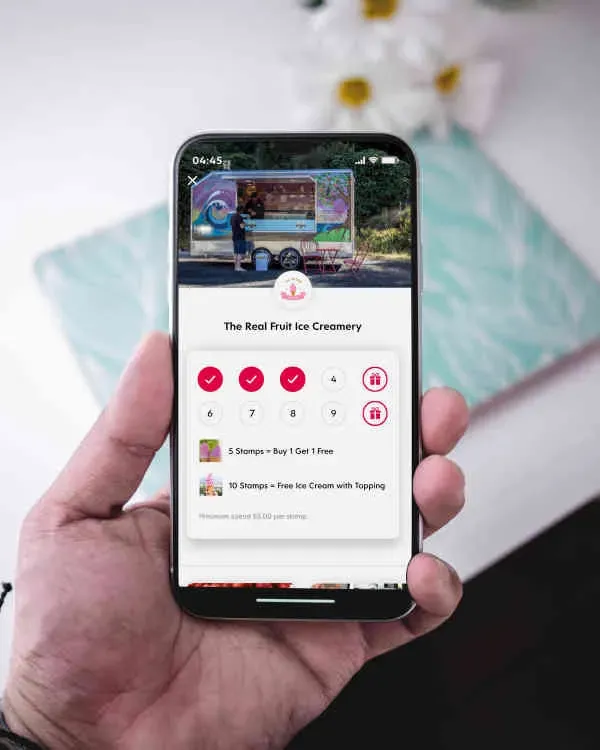
Paper or digital? It is a genuine decision, and the honest answer is that paper still wins on a couple of things that matter. What follows is what each format is actually good at, what it costs you, and how to tell which side of the line your business sits on.
One thing has changed since this article was first written in 2021: digital is now the default rather than the adventurous option. That shifts the question. It is no longer “should I risk going digital” but “is there a reason to stay on paper” — and sometimes there is.
The short version
| Paper | Digital | |
|---|---|---|
| Cost to start | Print run, from tens of dollars | Usually a monthly fee |
| Ongoing cost | Every reprint | The subscription, whether used or not |
| Customer has to | Remember to bring it | Have their phone |
| You learn who they are | No | Yes — that is the main prize |
| Reach them afterwards | No | Yes |
| Change the offer | Reprint everything | Edit it, takes a minute |
| Fraud | Easy to copy a stamp | Harder, depends on the system |
| Works when the wifi is down | Always | Usually not |
Paper stamp cards
What paper genuinely does well
Nobody has to be taught how it works. This is the real advantage and it is easy to underrate. A card and a stamp explain themselves in the time it takes to hand one over. No sign-in, no scanning, no “have you got the app”. At a busy counter that is worth something.
It feels like something. A well-designed card on good stock is a physical object with your brand on it, sitting in someone’s wallet. A screen cannot do that. If your brand leans on craft or care, that is not a small point.
It works when nothing else does. No signal in the basement, wifi down, phone flat, phone in the car. Paper does not care.
The cost is one-off and you can see it. A print run has a price. There is no subscription running in the background whether the program is working or not.
What paper costs you
You never find out who your customers are. This is the one that matters, and it is easy to miss because it costs you nothing visibly. Someone can visit fifty times, fill three cards, and you still cannot contact them. No name, no email, no idea how often they come. Every regular is anonymous.
You cannot reach them after they leave. No quiet Tuesday message, no birthday offer, no “we have missed you”. The card only works while they are standing in front of you, which is precisely when you least need it.
Changing anything means reprinting everything. Ten stamps turned out to be too many? That is a new print run, and every part-used card in circulation now says the wrong thing.
They get lost, and losing one usually ends the relationship. Not the customer — the program. Someone four stamps in who loses the card rarely starts again.
Stamps are easy to fake. A rubber stamp can be bought. A photocopier exists. Most owners find out about this late.
Someone has to manage the stock. Reordering, storing, making sure there are cards at every till. Small, endless.
Digital stamp cards
What digital genuinely does well
You build a customer list you own. This is the actual product. Names, emails, mobile numbers, birthdays, visit history — a record that keeps working after they leave, and that belongs to you rather than to a platform.
You can talk to them. A push notification or an email on a slow afternoon reaches people who already like you. That is the cheapest marketing available, and paper cannot do it at all.
Nothing is lost. The card lives on the phone they are holding. Stamps do not vanish because a wallet was cleaned out.
You can change the offer whenever you like. Ten stamps to eight, a different reward, double stamps this weekend — an edit, not a print run.
A bigger purchase can be worth more. Good systems let one scan carry several stamps, so “a stamp per $10” or a table of four earning four stamps works properly. A printed card physically cannot express that. (Ours issues up to twenty in one scan; several competitors do something similar, and some cannot do it at all.)
Automatic things happen without you. Welcome rewards, birthday offers, a nudge to someone who has not been in for a while — set once, then they run.
What digital actually costs you — including the awkward parts
Being straight about this, because a comparison that only criticizes paper is not a comparison.
It is a subscription, and it keeps charging. A print run is finished when it is finished. Software bills monthly whether the program is thriving or forgotten. Across the tools we compared and price-checked the range runs from free to US$269 a month for essentially the same job, so what you pay depends heavily on which one you pick.
Your customer needs their phone, charged, with signal. Usually fine. Occasionally not, and “occasionally” happens at the counter in front of a queue.
Almost all of them ask the customer to identify themselves somehow. A phone number, a wallet pass, a sign-in. It is one tap on most systems, but it is a step paper does not have, and a small number of people will decline.
You are dependent on somebody else’s software. If it breaks on a Saturday you are waiting on their support, not fixing it yourself. Worth asking what support actually looks like before you commit.
Staff have to learn something. Not much — most systems are a code on a screen — but it is a change at the till, and changes at the till need a few days.
One 2021 concern has largely gone away: that older customers would not use it. Wallet passes and plain camera scanning have made the interaction close to trivial, and the awkward step now is the sign-in rather than the technology. It is no longer the objection it was.
So which should you choose?
Rather than a verdict, three questions that decide it.
Do you want to be able to contact your customers? If yes, the decision is already made. This is the only capability paper cannot ever have, at any price, and it is the reason most businesses switch. If you genuinely do not care who your regulars are, paper is fine.
Does a bigger purchase deserve more reward? If a $40 bill should count for more than a $4 coffee, you need digital — a printed card cannot count. If every visit is worth the same, paper handles it.
Is the physical card part of the experience you are selling? For a few businesses — a bookshop, a bespoke tailor, somewhere the object matters — the card is part of the brand, and that is a legitimate reason to keep it.
A reasonable middle path: run digital as the program and print a small, nice card that carries the QR code to join. You get the list and the messaging, they get something to hold. Cheaper than a full print run, since the card is signage rather than a stamp record.
The honest summary
Paper is simpler, cheaper to start, and needs nothing from anyone. Digital costs a monthly fee and asks your customer for one extra tap, and in exchange you find out who your regulars are and can reach them tomorrow.
For most businesses that trade is worth making, which is why paper is now the deliberate choice rather than the default. But it is a trade, and anyone telling you digital has no downsides is selling you something.
If you want to see what the digital version actually feels like before deciding, you can build a card and scan it yourself on a 30-day free trial — that answers more in ten minutes than any comparison article, including this one.
Running loyalty across several independent businesses rather than one — a high street, a market, a shopping center? That is a different product with different pricing. See Digital Passport.