
Get shoppers walking your whole district, not just one shop
A shared passport across your member businesses. Visitors scan a QR code at each venue, collect stamps, and go in the draw for prizes when they complete it.
A shared campaign across businesses you don’t own. You run the program; each venue just displays a code.
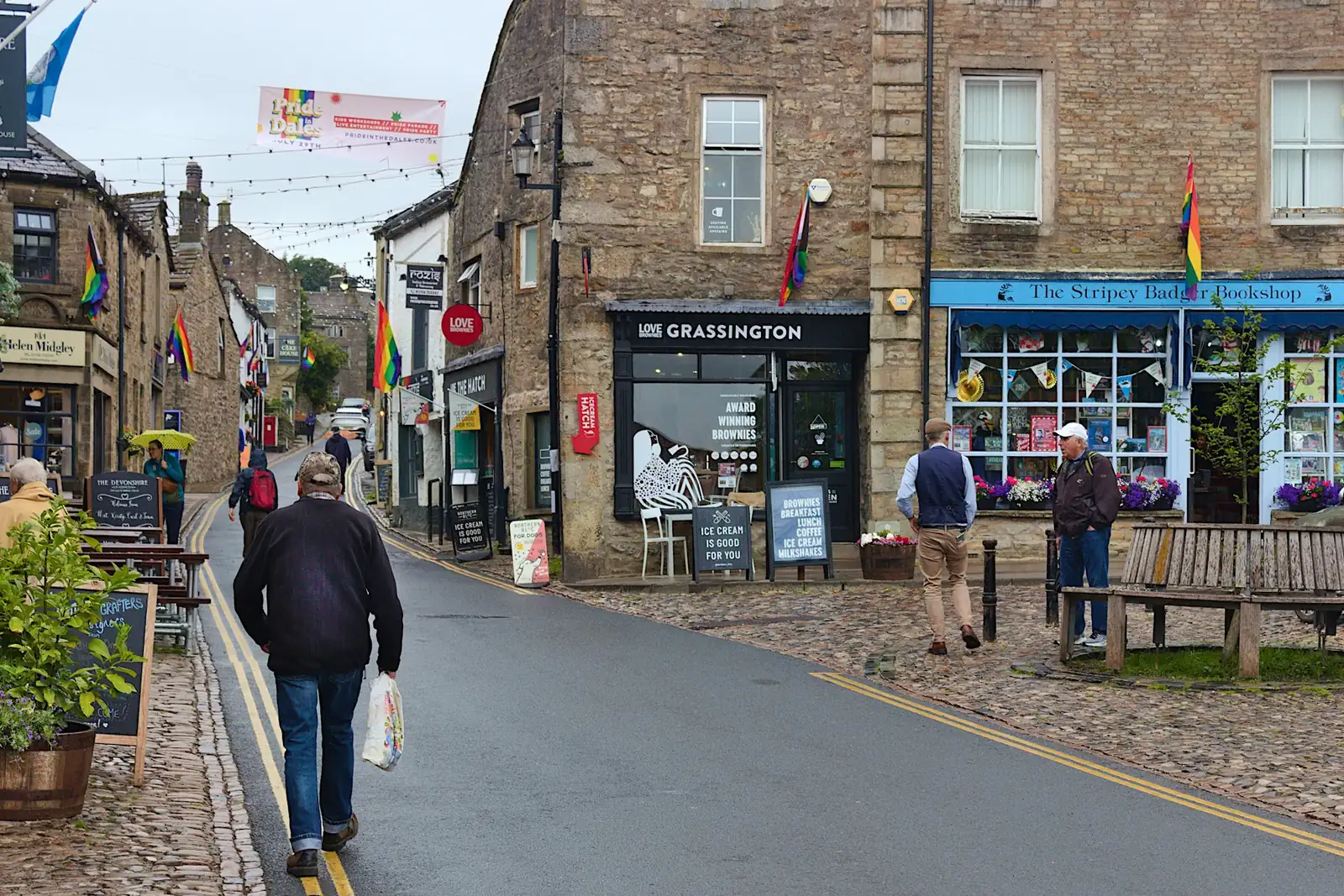
Why a passport
What it fixes for Business Improvement Areas
You need to prove the levy is working
Members want evidence their contribution drives real footfall. Every stamp is timestamped and tied to a venue, so you can report on participation by business and by campaign rather than relying on anecdote.
Paper passports are a printing bill and a black hole
Reprinting for every campaign is expensive, and once the passports are out the door you learn nothing. Add a venue mid-campaign without reprinting anything, and see results in real time.
Getting members to participate
Participation has to be near-zero effort for a busy shopkeeper. Each venue gets a printed QR code and nothing else to operate — no app, no hardware, no staff training.
How you launch one
Three steps, and you can start the first one now
Set your own account up and build one
Create an account, add your participating businesses, choose how many stamps a passport takes and what the prizes are. Nothing to install, and no call to wait for.
Have a play with it before you commit
Scan it yourself, walk a colleague through it, change the stamp count and the prizes. It is your program and nothing is locked until you activate it.
Tell us when you are ready to run it
We add the codes and quotas for each venue on activation. From there a business has one job — display its printed code. No app, no hardware, no point-of-sale integration and no staff training, and venues can be added later without reprinting.
The money you are spending belongs to your members
A BIA is not funded like a marketing department. It is funded by a compulsory charge on the businesses in the district, which is why every spending decision ends up in front of a board and, eventually, in front of the people paying it.
In the British Isles that mechanism is now large and well documented. British BIDs’ 19th Annual BID Survey & Report 2025 counts 345 active BIDs covering 138,543 business premises and investing £169,928,983 a year — up from £23.5m across 102 BIDs in 2010. 309 of those 345 set their levy as a percentage of rateable value, at a median rate of 1.5%, and 91% make their accounts publicly available to their levy payers.
The Canadian model differs in the detail and lands in the same place. The City of Toronto’s 2026 BIA operating budget report sets out 64 BIA budgets totalling $54.861m, of which $38.102m is raised by special levy on commercial property — and requires each board to hold an annual general meeting at which the membership approves that levy, before council approves it again.
So the question a passport has to answer is not “was it a nice campaign”. It is “which of my members got something for their money”, and that is a question about data.
Renewal is a vote, and roughly one in ten loses it
In the UK a BID cannot run for more than five years without going back to a ballot — that limit is section 54 of the Local Government Act 2003, and approval needs a majority both by number of voters and by aggregate rateable value.
British BIDs records 1,109 ballots since 2004, of which 1,002 succeeded: a 90.35% success rate, and 64 ballots in the twelve months to September 2025, eight of which failed. Median turnout was 39.9%.
That is the real reporting deadline. A campaign that produced footfall but no evidence of it is worth very little in a ballot paper’s worth of persuasion, and anecdote does not survive contact with a levy payer who believes the district spent their money on the other end of the street.
Every stamp in a passport is timestamped and attached to a venue. That turns participation into a per-member figure you can put in an annual report, next to the levy line, for each business that took part.
It has to be runnable by two people
British BIDs puts the median BID team at 2.1 full-time-equivalent staff, with 11% run by part-time staff only and 22% managed entirely by external consultants.
That number is the constraint behind most of what a BIA can and cannot deliver, and it is why the operational side of a passport is deliberately thin: you set the program up once, each participating business displays a printed QR code, and there is no hardware to install, no point-of-sale integration to negotiate and no staff to train in any of the member premises. Adding a business later does not mean reprinting.
What it costs
Only pay while your campaign runs
Programs are priced per participating venue, and you only pay for the months your campaign is actually active. Pause in the off-season and start again for the next one, keeping your program, your venues and your printed QR codes. Short campaigns are pro-rated.
per active campaign month, covering every venue in your band
a month between campaigns, keeping your program, venues and codes
Next step
Set one up and try it
Create an account, build a passport for your own venues and have a play with it. We add the venue codes and quotas when you are ready to activate.
A conversation, not a signup. Or email [email protected].